


The Enterprise Earn Stack: Building the Infrastructure for Onchain YieldOctober 2, 2026
READ MORE.svg)


As someone who has spent years working at the intersection of TradFi, crypto, and financial regulation, I often hear the same question: What will it take for DeFi to reach mainstream adoption?
The common assumption is that mass adoption means millions of people interacting directly with on-chain protocols: routing transactions, managing risk, monitoring collateral, optimizing returns. But this just isn’t the reality of how most people engage with financial systems today.
In traditional finance, very few individuals build or manage portfolios themselves. They don’t trade every day, evaluate yield strategies, or perform due diligence on every asset they hold. Instead, most rely on professionally designed, rules-based vehicles.
The numbers reflect this reality:
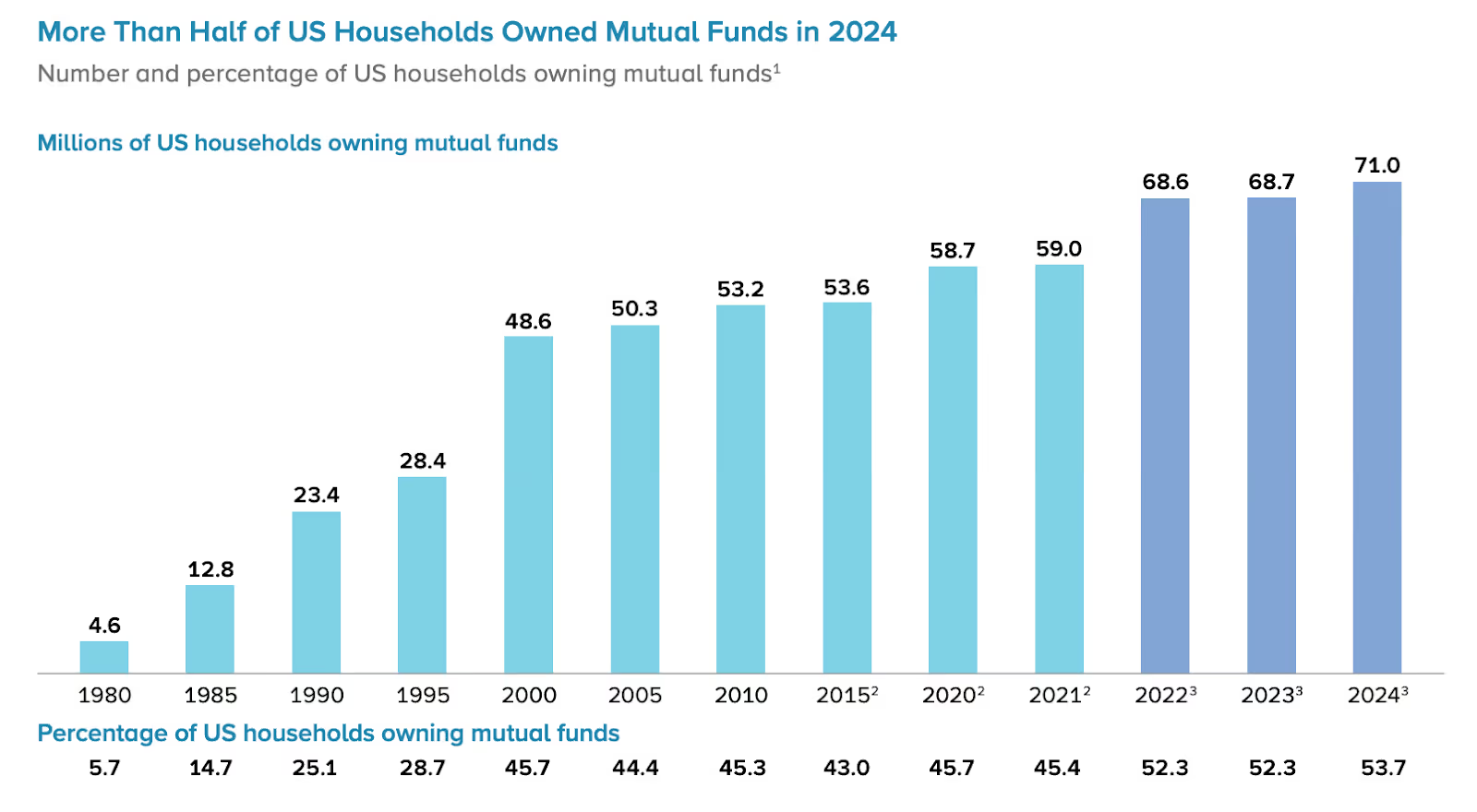
Structures like these are how the majority of people safely and conveniently participate in the capital markets. They are not seen as constraints on autonomy, but as infrastructure that abstracts away complexity while preserving access and investor choice.
Today, DeFi faces a parallel challenge. Navigating on-chain finance still requires a level of sophistication that most people (and most institutions and regulators) would not expect the average consumer to possess. Legal, compliance, and risk teams evaluating DeFi often reach the same conclusion: The underlying systems are powerful, but interacting with them directly is operationally intensive and difficult to manage.
Vaults, where users deposit funds from their self-hosted wallets into smart contracts that programmatically deploy the funds into DeFi protocols, change this landscape. They are non-custodial software primitives: transparent, forkable, and user-controlled. Their safeguards emerge from architecture rather than oversight, which is part of what makes them so well suited to both permissionless use and institutional adoption. They provide a path for ordinary users, institutions, and regulated entities to access DeFi safely and easily, without rewriting or constraining the underlying protocols. And importantly, vaults do this while fully preserving the right of any individual to interact with DeFi permissionlessly and non-custodially.
Before considering vaults as a scalability solution, it’s important to reaffirm a foundational principle, one that matters both philosophically and from a policy design perspective: Vaults do not and should not impose regulation or permissions at the blockchain protocol layer.
Nor should vaults alter the right to self-custody. Any person should continue to be able to interact directly with lending markets, restaking platforms, liquidity pools, or validator sets if desired. From a regulatory standpoint, this separation matters: Users who want full autonomy retain it, and innovation at the protocol layer remains untouched.
Vaults simply introduce optional structure for those who want it or need it, without compromising the rights of those who do not. Just as ETFs didn’t eliminate self-directed stock trading, vaults don’t impact self-directed DeFi. Instead, vaults expand the blockchain ecosystem without altering its core principles.
To support mainstream adoption, whether through fintech apps, banks, payment platforms, or institutional products, DeFi needs infrastructure that can satisfy a range of risk, compliance, and usability requirements. In my role as General Counsel of Veda, I see these requirements expressed in similar terms across the different types of institutional partners we talk to:
Vaults map well to these expectations. A vault:
To institutional legal and compliance teams, this architecture is more legible than most decentralized systems. Vaults are deterministic, auditable, and significantly easier to supervise than direct interaction with dozens of unaffiliated protocols.
Meanwhile, to DeFi-native users, protocols remain fully accessible.
Vaults are unusual in that they satisfy both sets of priorities simultaneously.
When evaluating consumer protection frameworks or advising on product design, I often return to a simple observation: Most people want access to economic opportunity, not the operational burden that comes with managing it.
Users generally want:
They do not want to track collateral ratios, evaluate protocol risk, rebalance portfolios, or monitor governance votes. No ordinary person wants to toggle between half a dozen dashboards, interpret liquidation waterfalls, or decipher whether a new “vote to adjust emissions” is routine maintenance or a five-alarm governance event. That is not how most people hope to spend a Tuesday night, just like most people don’t invest in stocks through day trading.
Vaults translate those responsibilities into transparent, rules-based smart contract logic. They can impose allocation limits, require multisig approvals, or enforce time-locked governance votes for changes. They can also implement time delays and audit triggers, restrict strategy drift, and provide real-time visibility into reserves, all of which align closely with regulatory expectations around safety and disclosure.
Meanwhile, users and institutions remain free to choose whether to rely on vaults or to interact with protocols directly.
This flexibility is what makes vaults a realistic foundation for mainstream access. They broaden participation without narrowing the autonomy of existing users.
From a regulatory perspective, one of the biggest concerns about institutional or consumer-facing DeFi products is the possibility that compliance pressures could push constraints down into the protocol layer, introducing identity requirements, gating mechanisms, or universal controls that undermine permissionlessness.
Vaults offer a better path. Compliance can be implemented at the product or front-end level, where regulated entities interact, rather than at the protocol level. Vaults can (but don’t have to) incorporate:
all without altering the underlying blockchain or affecting permissionless access for any other user.
In other words: vaults allow regulation to occur at the edges, not in the core. TradFi gets the guardrails it requires, DeFi natives retain open access, and developers remain free to innovate. This separation is not just a technical improvement; it is a crucial policy design principle. It preserves the benefits of decentralization while enabling responsible adoption by regulated institutions.
If DeFi succeeds in reaching widespread use, it will not be because the average person learned to manage validator sets, slippage tolerances, or the myriad of protocol-specific risks.
It will be because:
DeFi will scale because the infrastructure matures, not because the philosophy erodes. Vaults don’t diminish DeFi’s ideals. Rather, they make those ideals sustainable at the scale of a global financial system. They protect the right to self-directed DeFi while creating pathways for the individuals and institutions alike who don’t want to manage their own strategies.
Just as index funds made equity markets accessible without reducing individual autonomy, vaults can make DeFi broadly accessible without restricting permissionless participation. Expecting the average user to perform the level of diligence and management that, in the traditional financial system, are handled by entire teams of analysts, compliance officers, and portfolio managers is neither realistic nor consistent with sound consumer protection principles.
Infrastructure like vaults does not constrain DeFi. They are how DeFi evolves beyond a fringe financial experiment to become the default financial system for the world.



December 2025
Predictions from Veda's General Counsel on where DeFi goes from here.
As someone who has spent years working at the intersection of TradFi, crypto, and financial regulation, I often hear the same question: What will it take for DeFi to reach mainstream adoption?
The common assumption is that mass adoption means millions of people interacting directly with on-chain protocols: routing transactions, managing risk, monitoring collateral, optimizing returns. But this just isn’t the reality of how most people engage with financial systems today.
In traditional finance, very few individuals build or manage portfolios themselves. They don’t trade every day, evaluate yield strategies, or perform due diligence on every asset they hold. Instead, most rely on professionally designed, rules-based vehicles.
The numbers reflect this reality:
Structures like these are how the majority of people safely and conveniently participate in the capital markets. They are not seen as constraints on autonomy, but as infrastructure that abstracts away complexity while preserving access and investor choice.
Today, DeFi faces a parallel challenge. Navigating on-chain finance still requires a level of sophistication that most people (and most institutions and regulators) would not expect the average consumer to possess. Legal, compliance, and risk teams evaluating DeFi often reach the same conclusion: The underlying systems are powerful, but interacting with them directly is operationally intensive and difficult to manage.
Vaults, where users deposit funds from their self-hosted wallets into smart contracts that programmatically deploy the funds into DeFi protocols, change this landscape. They are non-custodial software primitives: transparent, forkable, and user-controlled. Their safeguards emerge from architecture rather than oversight, which is part of what makes them so well suited to both permissionless use and institutional adoption. They provide a path for ordinary users, institutions, and regulated entities to access DeFi safely and easily, without rewriting or constraining the underlying protocols. And importantly, vaults do this while fully preserving the right of any individual to interact with DeFi permissionlessly and non-custodially.
Before considering vaults as a scalability solution, it’s important to reaffirm a foundational principle, one that matters both philosophically and from a policy design perspective: Vaults do not and should not impose regulation or permissions at the blockchain protocol layer.
Nor should vaults alter the right to self-custody. Any person should continue to be able to interact directly with lending markets, restaking platforms, liquidity pools, or validator sets if desired. From a regulatory standpoint, this separation matters: Users who want full autonomy retain it, and innovation at the protocol layer remains untouched.
Vaults simply introduce optional structure for those who want it or need it, without compromising the rights of those who do not. Just as ETFs didn’t eliminate self-directed stock trading, vaults don’t impact self-directed DeFi. Instead, vaults expand the blockchain ecosystem without altering its core principles.
To support mainstream adoption, whether through fintech apps, banks, payment platforms, or institutional products, DeFi needs infrastructure that can satisfy a range of risk, compliance, and usability requirements. In my role as General Counsel of Veda, I see these requirements expressed in similar terms across the different types of institutional partners we talk to:
Vaults map well to these expectations. A vault:
To institutional legal and compliance teams, this architecture is more legible than most decentralized systems. Vaults are deterministic, auditable, and significantly easier to supervise than direct interaction with dozens of unaffiliated protocols.
Meanwhile, to DeFi-native users, protocols remain fully accessible.
Vaults are unusual in that they satisfy both sets of priorities simultaneously.
When evaluating consumer protection frameworks or advising on product design, I often return to a simple observation: Most people want access to economic opportunity, not the operational burden that comes with managing it.
Users generally want:
They do not want to track collateral ratios, evaluate protocol risk, rebalance portfolios, or monitor governance votes. No ordinary person wants to toggle between half a dozen dashboards, interpret liquidation waterfalls, or decipher whether a new “vote to adjust emissions” is routine maintenance or a five-alarm governance event. That is not how most people hope to spend a Tuesday night, just like most people don’t invest in stocks through day trading.
Vaults translate those responsibilities into transparent, rules-based smart contract logic. They can impose allocation limits, require multisig approvals, or enforce time-locked governance votes for changes. They can also implement time delays and audit triggers, restrict strategy drift, and provide real-time visibility into reserves, all of which align closely with regulatory expectations around safety and disclosure.
Meanwhile, users and institutions remain free to choose whether to rely on vaults or to interact with protocols directly.
This flexibility is what makes vaults a realistic foundation for mainstream access. They broaden participation without narrowing the autonomy of existing users.
From a regulatory perspective, one of the biggest concerns about institutional or consumer-facing DeFi products is the possibility that compliance pressures could push constraints down into the protocol layer, introducing identity requirements, gating mechanisms, or universal controls that undermine permissionlessness.
Vaults offer a better path. Compliance can be implemented at the product or front-end level, where regulated entities interact, rather than at the protocol level. Vaults can (but don’t have to) incorporate:
all without altering the underlying blockchain or affecting permissionless access for any other user.
In other words: vaults allow regulation to occur at the edges, not in the core. TradFi gets the guardrails it requires, DeFi natives retain open access, and developers remain free to innovate. This separation is not just a technical improvement; it is a crucial policy design principle. It preserves the benefits of decentralization while enabling responsible adoption by regulated institutions.
If DeFi succeeds in reaching widespread use, it will not be because the average person learned to manage validator sets, slippage tolerances, or the myriad of protocol-specific risks.
It will be because:
DeFi will scale because the infrastructure matures, not because the philosophy erodes. Vaults don’t diminish DeFi’s ideals. Rather, they make those ideals sustainable at the scale of a global financial system. They protect the right to self-directed DeFi while creating pathways for the individuals and institutions alike who don’t want to manage their own strategies.
Just as index funds made equity markets accessible without reducing individual autonomy, vaults can make DeFi broadly accessible without restricting permissionless participation. Expecting the average user to perform the level of diligence and management that, in the traditional financial system, are handled by entire teams of analysts, compliance officers, and portfolio managers is neither realistic nor consistent with sound consumer protection principles.
Infrastructure like vaults does not constrain DeFi. They are how DeFi evolves beyond a fringe financial experiment to become the default financial system for the world.