
.png)

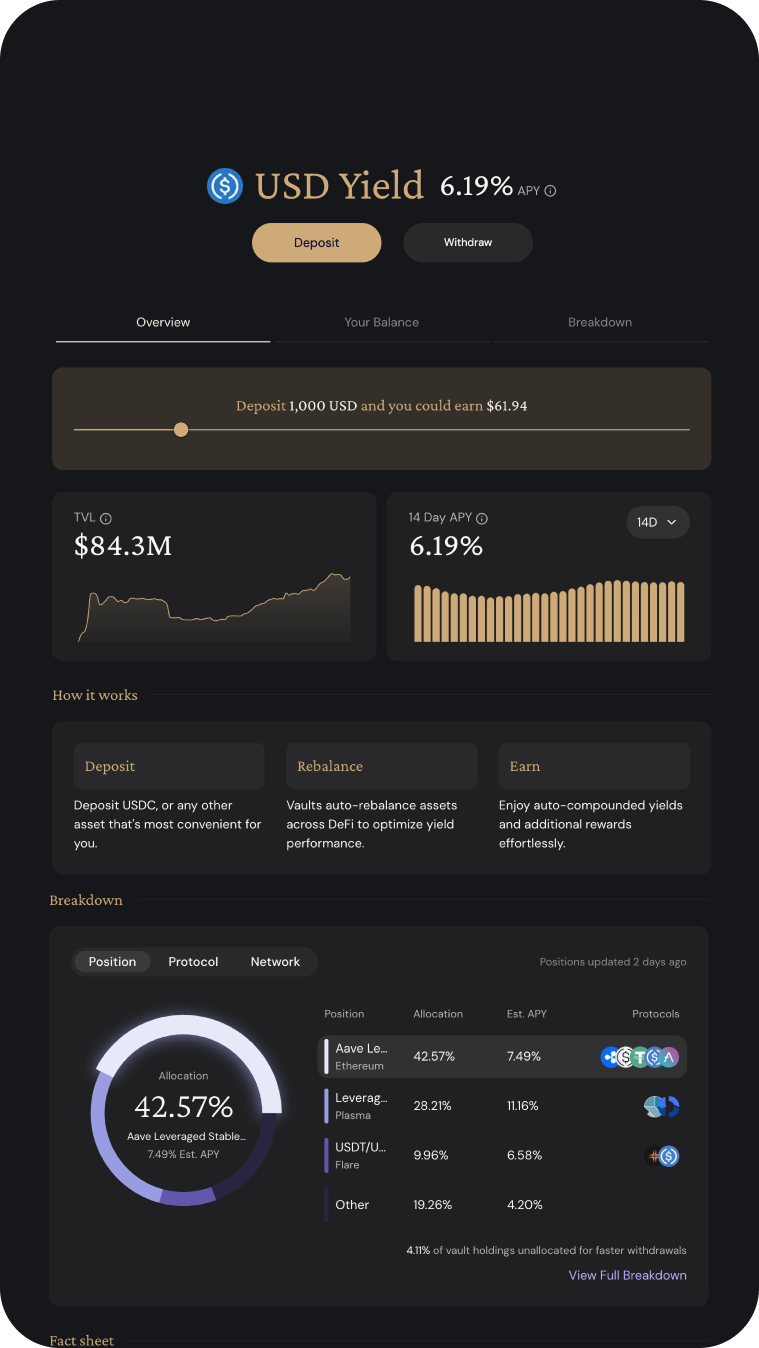
Veda vaults powering EtherFi Liquid launched in early 2024 and continue to offer competitive yield on stablecoins and ETH.








Strategically, it was important for us to have these DeFi vaults built-in. It just felt like the right product for the user. It was also a natural next step on this road to becoming a DeFi bank.

The EtherFi LiquidETH vault offers a combination of fixed-rate and variable yield. Veda can power fixed-rate vaults, variable yield vaults, or deployments that offer a mix of both.
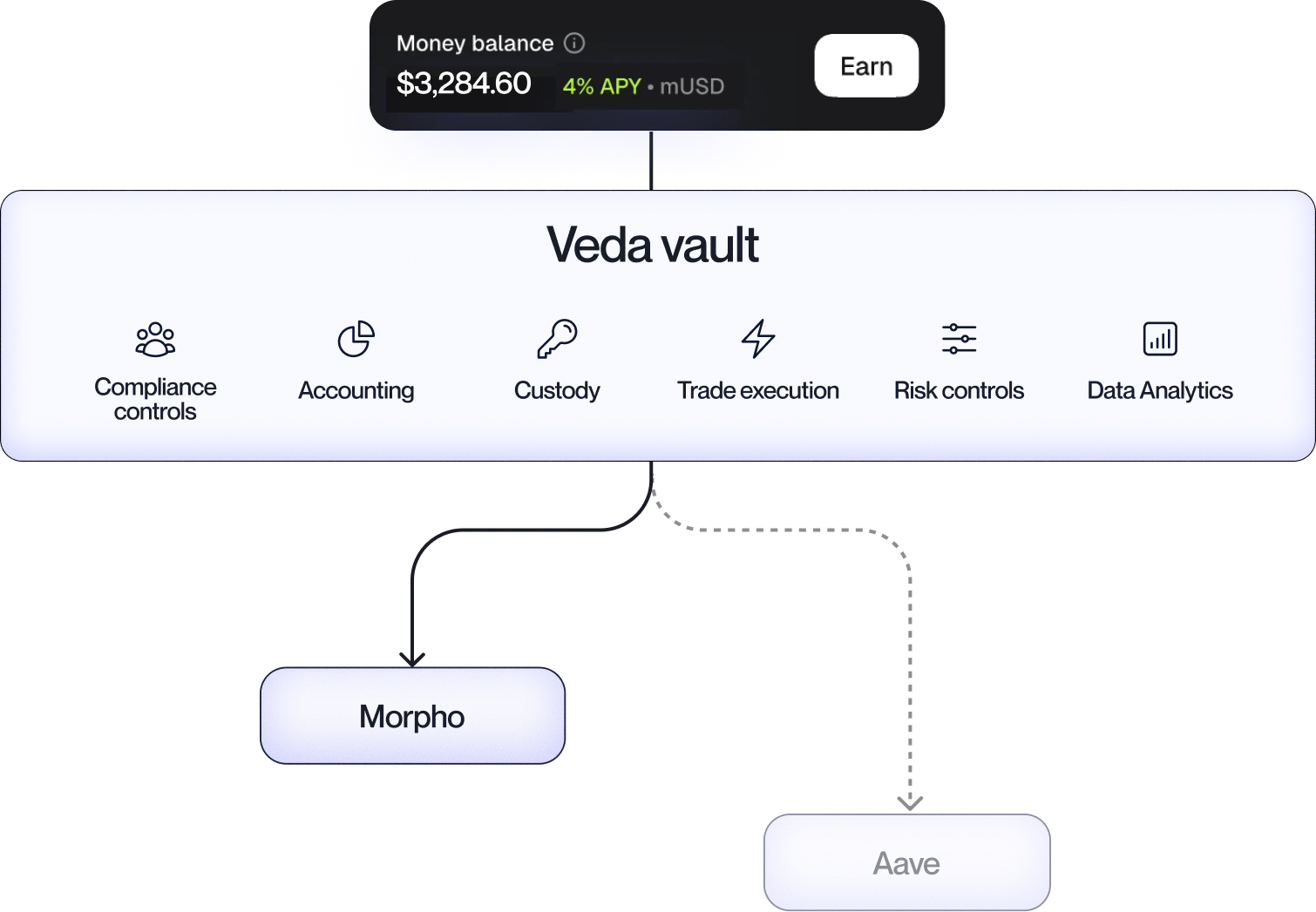
Because each Veda vault can support allocating to multiple protocols across multiple chains, each EtherFi Liquid vault is able to source yield from multiple DeFi protocols like Aave, Pendle, Compound, and Uniswap across Ethereum and other chains.
EtherFi chose Veda’s non-custodial BoringVault infrastructure because of its modular design. Veda architecture offers more security and composability than alternatives because of its central smart contract with intentionally minimal internal logic and functions delegated to external modules.
Veda has helped us step up our game in terms of the broader EtherFi experience, including that of Liquid. A key benefit of Veda’s technology is the way it eases users into a wide array of yield-generating primitives.
By one year post-launch, EtherFi's Veda vault products continued to grow and exceeded $2.1 billion in deposits.
The EtherFi Card has seen over 8.2 million total transactions across 100,000 users, over $1.2 billion in total top-up volume, and $660 million in total spend volume.
With over 2 years of uptime, Veda’s EtherFi vaults are a proven solution that made it seamless for the neobank to switch chains, yield strategies, and offer a wide range of yield on stablecoins, BTC, ETH, and more while supporting card payments at billion-dollar scale.

.svg)

.svg)
.svg)
.svg)